Making the best decision about a roof replacement starts with knowing what contractors in your market are actually charging — not what a national cost calculator suggests. In Lansing, what you’ll pay for an entire roof comes down to several interconnected factors: roof size, material selection, labor conditions, and the Michigan weather that roofing systems in this region are asked to endure year after year. This guide is built to give Mid-Michigan homeowners a clear, honest picture before a single estimate arrives.
Key Takeaways
- Most Lansing roof replacements cost $9,000–$18,000
- Architectural asphalt shingles are the most common roofing material across Michigan roofs
- Square foot installed costs average $3.75–$6.75 for a standard replacement
- Metal roofs offer exceptional weather resistance and a long lifespan at a higher upfront cost
- Roof size, pitch, material selection, and tear-off all significantly affect the final price
- Michigan homeowners should budget 10–15% beyond the base estimate for unexpected costs
- Free estimates from multiple licensed roofing companies help ensure quality workmanship at a fair price
Table of Contents
A roof replacement is one of the most consequential home improvement decisions Lansing-area homeowners make — and one where the numbers that matter most are local ones. What roofing companies actually charge in Mid-Michigan reflects local material costs, labor markets, freeze-thaw cycles, and building requirements that national averages simply don’t capture. Whether you’re in East Lansing, Holt, Okemos, Delta Township, or out toward Grand Ledge, this guide delivers the market-specific information you need before the calls begin.
What Is the Average Roof Replacement Cost in Lansing, Michigan?
For most Lansing-area homes, a Michigan roof replacement using asphalt shingles runs between $9,000 and $18,000, with a typical mid-range project landing around $12,000 to $16,000. On a per-square-foot basis, that translates to roughly $3.75 to $6.75 square foot installed, depending on materials, roof complexity, and the roofing contractor you choose.
Architectural asphalt shingles account for the vast majority of roofing jobs in this market, and the figures above reflect that baseline. A metal roof or other high-end option pushes the total considerably higher — those are covered in full below.
| Key numbers at a glance | |
| Average cost in Lansing | $9,000–$18,000 |
| Typical mid-range project | $12,000–$16,000 |
| Per square foot installed | $3.75–$6.75 |
| Most common material | Architectural asphalt shingles |
What Determines the Cost of a New Roof in Mid-Michigan?
Several variables shape where any given roofing job lands within the ranges above. Understanding them before you start collecting estimates puts you in a much stronger position.
How Does Roof Size Drive the Total Price?
Every roofing project is priced in “squares” — one square equals 100 square feet of roof surface. A larger home requires more shingles, more underlayment, more labor hours, and more disposal capacity for the old roof. It’s the most direct and predictable cost driver in any replacement project, and one homeowners simply can’t change. More roof means more of everything.
Do Pitch and Slope Meaningfully Affect the Price?
More than many homeowners expect. A low-pitch roof is faster, safer, and more efficient for a roofing crew to work on. A steep pitch demands additional safety rigging, slows production considerably, and increases the physical difficulty of the job — all of which translate into higher costs. Any pitch above 6:12 typically carries a surcharge in this market, and roofing systems on very steep or complex roofs can carry a substantial one.
How Much Does Roof Geometry Add to the Roofing Job?
A clean, simple gable roof is the most efficient roofing job a contractor can take on. Add valleys, hips, dormers, skylights, or changes in pitch across different roof sections, and both the time required and the material costs climb. Each additional feature demands precise flashing, careful cutting, and generates more material waste. Lansing’s older neighborhoods — Old Town, the Westside Neighborhood, and established East Lansing streets — feature homes with architectural character that translates to more involved roofing projects.
How Far Apart Are the Cheapest and Most Expensive Roofing Materials?
Very far. The gap between a basic 3-tab asphalt shingle roof and a premium standing seam metal roof or full slate installation can reach tens of thousands of dollars on the same home. Most Lansing homeowners land on architectural shingles as the right combination of cost, durability, and weather resistance for Michigan conditions. Those planning to stay long-term — or who simply want to make one roofing decision that lasts — increasingly look at a metal roof as a high-end investment that pays off over time.
Does the Roofing Contractor You Hire Change the Final Price?
Yes — and the difference isn’t just about margin. Roofing companies that use only the best materials, maintain trained crews, hold manufacturer certifications, and stand behind their work with strong warranties operate to a different standard than lower-overhead operations. That difference shows up in pricing — and in the quality of what gets installed on your home. The goal isn’t the lowest number; it’s the best value from a contractor committed to the highest standards of quality workmanship. Get free estimates from at least two or three licensed, insured roofing contractors and compare them in detail before deciding.
Is There a Strategic Window for Scheduling a Roof Replacement in Lansing?
Lansing’s roofing season is compressed by Michigan weather. Spring through fall is peak demand, and winter work slows sharply as snow and ice make installation difficult. Scheduling in early fall — before demand peaks around storm season — can sometimes improve both pricing and crew availability. That said, roof damage, storm damage, or an old roof showing active signs of failure aren’t situations that should wait on favorable timing.
What Do Different Roofing Materials Cost in Michigan?
The table below covers the most common roofing systems available to Lansing homeowners, their installed cost ranges, expected lifespans in Michigan’s climate, and who each option suits best.
| Material | Installed Cost (per sq ft) | Lifespan in Michigan | Best For |
| 3-Tab Asphalt Shingles | $3.50–$4.75 | 20–25 years | Budget-conscious replacement |
| Architectural Asphalt Shingles | $4.75–$6.50 | 25–30 years | Most Lansing homeowners |
| Metal Shingles | $7.50–$12.00 | 40–60 years | Metal look, easier installation |
| Standing Seam Metal | $8.50–$15.00 | 40–70 years | Long-term ownership, minimal maintenance |
| Clay / Concrete Tile | $12.00–$25.00 | 40–75 years | Specialty aesthetic; structural review required |
| Slate | $15.00–$30.00 | 75–100+ years | Premium, historic, or long-hold homes |
Why Do Asphalt Shingles Remain the Standard Across Michigan Roofs?
Architectural shingles have steadily replaced 3-tab as the baseline for most Michigan roof replacements — and the reasons hold up in Lansing as clearly as anywhere in the state. They’re thicker, more resistant to wind uplift and impact damage, and considerably better-looking than standard shingles. The price gap between architectural and 3-tab has narrowed enough that most reputable roofing contractors now recommend architectural as the default starting point for any quality asphalt shingle roof installation.
In Mid-Michigan’s freeze-thaw climate, a properly installed asphalt shingle roof typically delivers 25 to 30 years of reliable performance. Michigan code requires ice and water shield at all eaves, extending 24 inches inside the warm wall line — a non-negotiable protection against the ice dams that Lansing winters reliably produce, and one that should appear as standard in every contractor’s proposal. Ridge vents and proper attic ventilation are equally critical: without them, trapped heat and moisture shorten a roof’s lifespan from the inside out, and even the best shingles underperform.
When Does a Metal Roof Make Financial Sense in Lansing?
A metal roof demands a higher upfront investment than asphalt — but for homeowners with a long ownership horizon, the math shifts considerably when you factor in a 40- to 70-year lifespan with minimal maintenance. Michigan’s winters make the case even more compelling: metal handles snow load, ice, and freeze-thaw cycling better than any other common roofing material.
Why Lansing homeowners choose a metal roof:
- Lifespan of 40–70 years (standing seam) or 40–60 years (metal shingles)
- Superior weather resistance under heavy snow, ice dams, and Michigan’s freeze-thaw conditions
- Lower long-term maintenance costs over the entire roof’s life
- Energy-efficient performance that can reduce heating and cooling loads year-round
- Strong curb appeal and lasting property value
Standing seam remains the premium choice for longevity and performance; metal shingles offer comparable durability at a more accessible price point.
How Much Does Labor Cost for Roof Replacement in Lansing?
Labor typically accounts for 40 to 60 percent of the total cost of a roof replacement. In the Lansing market, labor runs roughly $150 to $300 per square, depending on crew size, company overhead, and the demands of your specific roofing job.
What tends to push labor costs toward the higher end:
- Steep pitches requiring additional safety rigging and slowing the roofing crew’s production
- Complex roof geometry with multiple valleys, dormers, hips, or penetrations
- Difficult site access or limited staging space around the home, including attached or detached garages that complicate crew movement
- Tear-off involving multiple layers of the existing old roof
- Damaged decking, compromised insulation, or structural issues discovered once the shingles are removed
Older homes in East Lansing, Old Town, and the Westside Neighborhood frequently surface additional decking needs — worth factoring into your expectations before the project begins. A full tear-off is standard practice for most Michigan roof replacements. State building codes limit how many shingle layers can be stacked, and most reputable contractors recommend it regardless, because it’s the only reliable way to inspect what’s underneath before installing new roofing systems.
What to Expect Beyond the Base Estimate
Every contractor proposal covers the agreed scope of work. These are the items that sometimes appear as separate line items — or only emerge once the old roof is removed.
What Are Permit and Inspection Fees in the Lansing Area?
Roofing permits in the Lansing area typically run $100 to $250, depending on the municipality. Established roofing companies handle permit applications and include those costs in their proposals. Be cautious of any contractor who suggests bypassing the permit process — it creates genuine liability and can become a complication when you go to sell the home or make an insurance claim down the road.
How Much Does Tear-Off and Disposal Add to the Project?
Tear-off and disposal may be bundled into the base estimate or listed as a separate line — confirm before signing. Disposing of a full roof load typically runs $300 to $600, depending on the home’s size and how many layers of roofing are being removed in the tear-off process.
What If There’s Damage Beneath the Shingles?
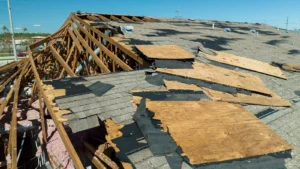
Once the old roof is off, the crew may find decking that’s soft, rotted, or damaged by ice dam infiltration — a common finding in Mid-Michigan homes with any history of roof damage or winter moisture problems. Replacement runs $80 to $150 per sheet of plywood. It’s also worth knowing that serious ice dam damage can sometimes affect attic insulation and even drywall below — a thorough inspection during tear-off is the best way to catch those issues early, before they become bigger repairs. On older Lansing homes, budgeting for two to five sheets of decking as a contingency is a sensible precaution.
Are Ridge Vents, Underlayment, and Flashing Part of the Proposal?
They should be — without exception. Ridge vents, proper underlayment, and correctly installed flashing are fundamental components of any roofing system built to the highest standards. If a proposal comes in noticeably below the competition, ask specifically what was excluded before drawing any conclusions. A low bid that omits proper ventilation or underlayment isn’t a bargain; it’s a shortened roof lifespan waiting to happen.
How Much Does a New Roof Cost Based on Home Size?
The following examples use architectural asphalt shingles — the most common choice for Lansing-area homeowners — with a moderately complex roof and standard pitch. Actual costs will vary based on the factors described above.
| Home Size | Roofing Squares | Estimated Project Cost |
| Small Home (1,200–1,600 sq ft) | 15–18 squares | $9,000–$13,500 |
| Medium Home (1,800–2,500 sq ft) | 20–28 squares | $12,000–$18,000 |
| Large Home or Premium Materials (2,500+ sq ft) | 28+ squares | $18,000–$34,000+ |
A metal roof or standing seam installation on a larger or more complex home can push well beyond the large-home range, particularly when structural repairs or full redecking are involved.
How Can I Estimate My Own Roof Replacement Cost?
A working ballpark before contractor conversations gives you useful context — and makes it easier to recognize when a proposal seems out of line in either direction.
- Estimate your roof’s square footage. Measure your home’s footprint, apply a slope factor (1.1 for a gentle pitch, up to 1.5 for a steep roof), and divide by 100 to get your approximate square count. If you plan to replace a garage roof at the same time, add that square footage separately.
- Apply Lansing per-square rates. Architectural shingles with labor in this market run roughly $450 to $600 per square for most standard roofing jobs. Multiply by your square count for a working baseline.
- Add a contingency. Tack on 10 to 15 percent to cover permit fees, disposal, and any decking or insulation repairs that surface once the tear-off is complete.
That gives you a ballpark — not a bid. For an accurate estimate tied to your specific home, a free inspection from a licensed contractor is the only reliable path forward.
Does Homeowners Insurance Cover Roof Replacement in Michigan?
It depends on the cause. Storm damage — hail, wind, fallen trees, or ice — is often covered under a standard homeowners policy, and in Michigan’s weather-active climate, a meaningful share of roof replacements involve at least a partial insurance claim. The process requires documentation, a professional damage assessment, and coordination between your roofing contractor and your insurer.
Wear, age, and normal deterioration are rarely covered. If you suspect storm or ice damage, have a licensed contractor inspect and document the roof damage before you file. Approaching your insurer without that documentation in hand is one of the more avoidable mistakes Lansing homeowners make in the claims process.
What Financing Options Are Available for Lansing Homeowners?
Financing options are widely available across Mid-Michigan. Most roofing companies work with third-party lenders and offer structured payment plans, and some homeowners use a home equity line of credit to fund the project cost-effectively. Ask about financing options early in the process — well before construction begins — so you can make the best decision for your situation.
Frequently Asked Questions: Roof Replacement Cost in Lansing
What’s a realistic budget for a new roof in Lansing, Michigan?
Plan for $9,000 to $18,000 for a standard architectural shingle replacement, with most mid-range projects in the Lansing area landing between $12,000 and $16,000. Larger homes, steep pitches, high-end roofing materials, or significant decking repairs push costs higher. Free estimates from two or three licensed Mid-Michigan roofing contractors — compared line by line — give you the most reliable picture of what your specific home will cost.
How does Michigan weather specifically affect roofing systems in Lansing?
Mid-Michigan’s climate is one of the more demanding environments for residential roofing systems in the Midwest. Lansing regularly experiences significant snow accumulation, deep freeze cycles, and the ice dam formation that comes with repeated freeze-thaw swings across winter and early spring. These conditions accelerate wear on any roofing material that isn’t properly installed, ventilated, and protected with code-compliant ice and water shield. A roof that performs adequately in a milder climate may fail years ahead of schedule in Lansing without the right installation practices underneath it. Michigan’s 24-inch ice and water shield requirement at all eaves exists precisely because of what this climate does to improperly protected eaves over time.
Should I replace my garage roof at the same time as my house?
It’s worth considering seriously — especially if both roofs are close in age or the garage is showing similar wear. Replacing both in a single roofing job typically costs less per square than scheduling them as separate projects, since the contractor mobilization, permit, and disposal costs are shared. It also eliminates the disruption of scheduling a second project in the near future. Ask your contractor to include both in the estimate so you can evaluate the combined cost against the alternative.
What’s the difference between what a high-end roofing company charges and a cheaper competitor?
The price difference between roofing companies in the Lansing market can be substantial — sometimes thousands of dollars on the same project. What that gap should reflect is real: only the best materials from manufacturer-certified suppliers, trained crews with demonstrated experience on Michigan roofs, stronger warranty coverage on both materials and workmanship, proper permitting, and accountability after the job is complete. What it sometimes reflects instead is simply a higher margin. The way to tell the difference is to ask for itemized proposals, check references, verify licensing and insurance, and ask specific questions about what materials are being used and why. Quality workmanship from a roofing company held to the highest standards is worth paying for — but you should be able to see exactly what you’re paying for before you agree.
How do I know my attic is properly ventilated after a roof replacement?
Proper attic ventilation is one of the less visible but most important components of a well-installed roofing system. After a replacement, your attic should have a balanced system of intake venting (typically at the soffits) and exhaust venting (ridge vents at the peak), allowing continuous airflow that regulates attic temperature in summer and prevents moisture and ice dam buildup in winter. Signs of inadequate ventilation include excessive heat in the attic during summer, ice dam formation at the eaves in winter, or shingles that age prematurely. A reputable Lansing roofing contractor will assess your ventilation as part of the inspection process and include any necessary upgrades in their proposal — ask specifically about it if they don’t raise it first.
Ready to Get a Free Estimate for Your Lansing Home?
The ranges in this guide reflect the Lansing market as it actually operates — but the only estimate that truly matters is one built around a real inspection of your specific home and roof. The right roofing contractor will walk the roof, document what they find, and deliver a clear, itemized proposal at no cost and with no pressure to commit.
Before you sign anything, make sure to:
- Schedule a free on-site inspection with a licensed Lansing-area roofing contractor
- Ask for an itemized proposal that separates materials, labor, tear-off, disposal, and permits
- Confirm that ice and water shield, ridge vents, and proper attic ventilation are included
- Set aside a contingency of 10–15 percent for unexpected decking, insulation, or structural repairs
- Verify the contractor carries proper licensing, insurance, and manufacturer certifications
Mr. Roof has served Mid-Michigan homeowners — in Lansing and the surrounding communities — for decades, with a consistent commitment to quality workmanship, only the best materials, and the highest standards on every roofing job we take on. Schedule your free inspection today and get a straight answer on what your roof needs — and what it will cost.